
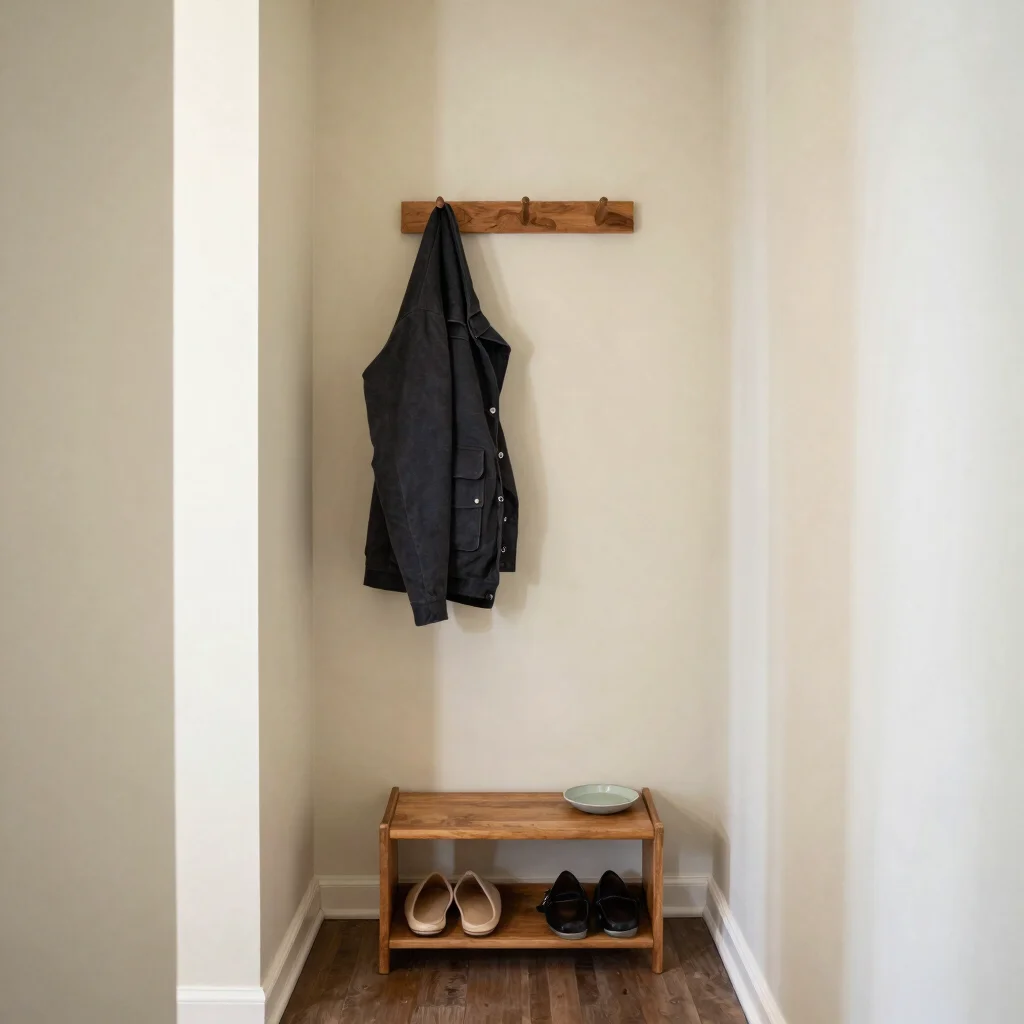
In a small home, the entryway often has to do its job in a few feet of hallway. When shoes gather by the door and keys disappear under the mail, leaving home becomes a daily scavenger hunt. A useful setup doesn’t need built-ins; it needs a clear place for the things you reach for most.
Start with the daily pile
Notice what lands by the door over a few ordinary days: perhaps a work bag, dog leash, tote, or two pairs of shoes. Design around that short list instead of trying to create storage for every object in the house. The goal is to make the usual routine easier, not to hide every sign of living.
If the hallway is narrow, keep the floor as open as possible. A slim tray can collect keys and sunglasses on an existing console, while a small basket beside the door can hold the shoes that are currently in rotation. Measure the walkway before adding furniture, especially in shared or apartment corridors.
Use renter-friendly storage
A freestanding coat rack, over-the-door hooks, or a removable hook used within its stated limits can add a place for bags and jackets without a built-in closet. Check the rental rules and the product instructions before attaching anything to a wall or door, and avoid placing heavy items where they could fall.
Give small items a dependable landing spot. A shallow dish or tray is easier to maintain than a deep bowl where receipts and loose change disappear. If several people share the entry, separate hooks or labeled baskets can make the routine clearer without adding much visual noise.
Keep the reset simple
Choose one small moment for a reset, such as putting away shoes before bed or returning the keys as soon as you come in. A system only works if it fits the household’s habits, so don’t add more containers than you need. Leave a little breathing room; an entryway that is easy to use is more helpful than one that looks perfectly staged.
If you’re considering storage accessories through our affiliate links, we may earn a commission at no extra cost to you. Compare measurements and attachment requirements before choosing anything, and start with what you already own if it can solve the problem.